
Why this work exists
Ideas for building human systems that remain capable of trust,
agency, correction, and repair.
Ethiocratic Media is an independent publishing and educational project
exploring how people, relationships, institutions, and societies become
healthier, more resilient, and more capable of learning from what goes wrong.
The work brings together secure attachment, neurodivergence, systems thinking,
leadership, agency, information integrity, and lived experience to examine
a larger question:
What helps human systems flourish, and what causes them to become trapped
in self-protective patterns?
What Ethiocratic Media explores
The work moves across multiple scales of human life,
from nervous systems and relationships to leadership,
institutions, culture, and public understanding.
Human development
Security, attachment, and regulation
Human beings develop inside relationships. Secure attachment,
co-regulation, emotional safety, and reliable repair shape how people
learn to trust themselves, other people, and the systems around them.
Agency & structure
The A.C.E. Framework
Agency, Certainty, and Expectations interact to shape how people
understand what is happening, what is being asked of them,
and how much meaningful room they have to act.
Systems & correction
The Sociological Immune System
The Sociological Immune System examines how protective responses
operate across the body, individual, relationship, group,
institution, and societal scales, including how healthy protection
can become captured by self-reinforcing response loops.
What “Ethiocratic” means
Ethiocracy is not meant as another ideology demanding obedience.
It is a way of asking what kind of character, structure,
and accountability should accompany the exercise of power.
Ethos
Character matters because power amplifies whatever already exists
within the person or system exercising it. Integrity, humility,
reality contact, and the capacity for correction matter alongside
competence and authority.
Kratos
Power is unavoidable in families, workplaces, institutions,
governments, and communities. The question is not whether power
exists, but how it is exercised, constrained, corrected,
and placed in service of human beings.
Agency
Healthy systems cannot force people into flourishing.
They can create conditions that provide clarity, security,
meaningful choice, and consequences without turning protection
into domination.
How the work is developed
Ethiocratic Media is a synthesis project.
Its ideas grow through research, lived experience,
disciplined inquiry, conversation, writing, and correction.
Draw from multiple disciplines
Attachment theory, developmental psychology, neuroscience,
systems thinking, leadership, sociology, philosophy,
theology, and institutional analysis all contribute different pieces.
Translate ideas across scales
A pattern visible in one person may look different in a relationship,
family, organization, or society. The work looks for useful connections
without pretending those scales are identical.
Keep ideas open to correction
A framework becomes dangerous when protecting the framework becomes
more important than staying in contact with reality.
Claims should remain testable, revisable, and responsive to evidence.
Make complexity usable
The goal is not complexity for its own sake.
Good frameworks give people language for patterns they can observe,
question, apply, and challenge in ordinary life.
About the founder
Ethiocratic Media grew from a long effort to understand
why people and systems sometimes protect what harms them,
and what makes genuine repair possible.
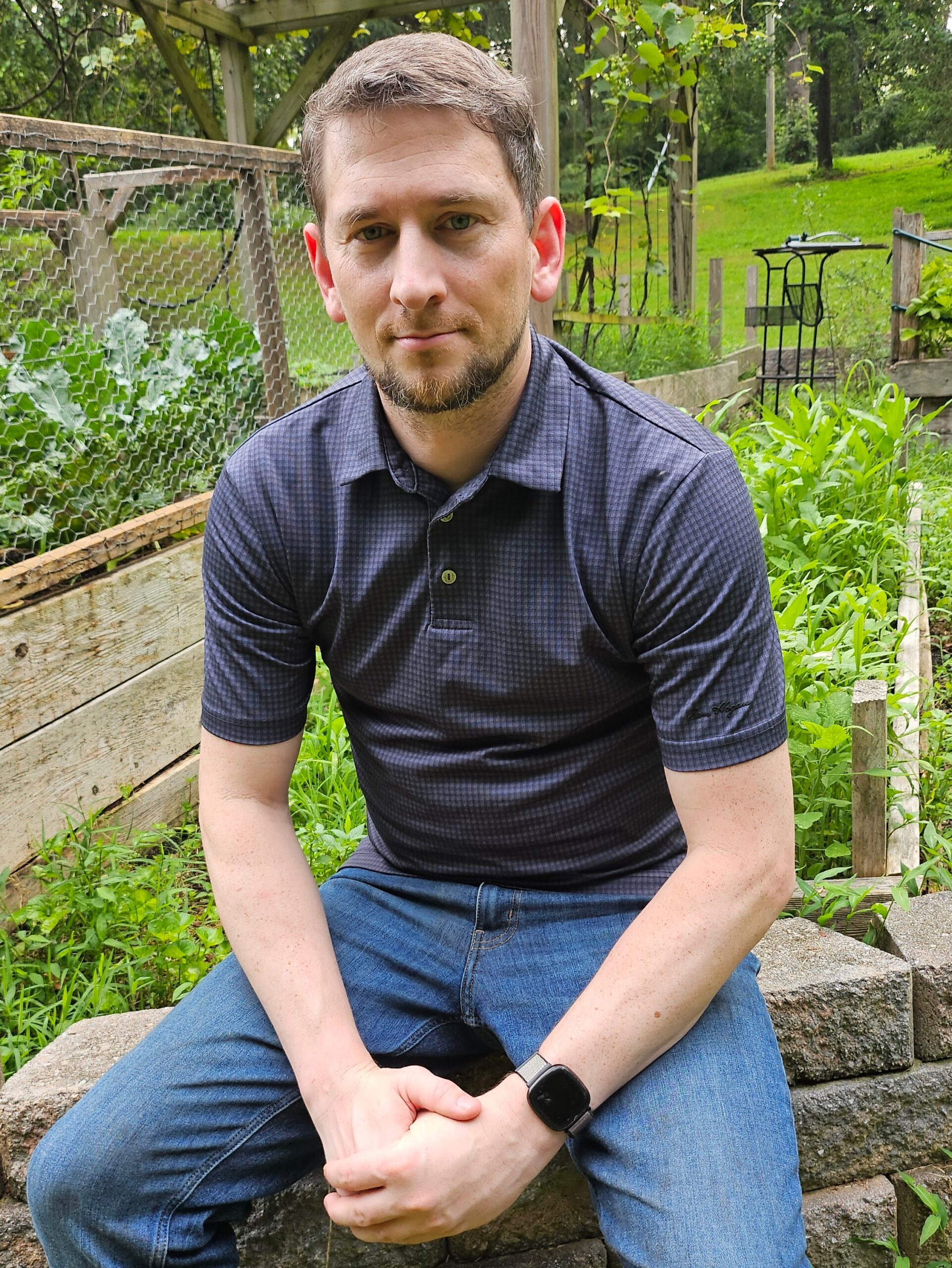
Phil Howell
Phil Howell is a father, writer, veteran, and systems thinker whose work
grew from years of trying to understand the interaction between trauma,
neurodivergence, attachment, leadership, institutional behavior,
and human agency.
His background includes military intelligence, technical work,
fatherhood, faith, personal loss, institutional conflict,
and the long process of rebuilding after experiences that challenged
his assumptions about authority, belonging, responsibility, and trust.
Rather than treating those experiences as a complete explanation,
he began using them as questions:
What patterns appear repeatedly?
Under what conditions do they emerge?
What maintains them?
What evidence would challenge the interpretation?
What allows a person or system to correct course?
Those questions eventually contributed to the development of
The Sociological Immune System,
the A.C.E. Framework,
and the broader work now published through Ethiocratic Media.
Built through many voices
No serious body of thought develops in isolation.
Ethiocratic Media is shaped by researchers, writers,
clinicians, educators, leaders, faith traditions,
personal relationships, and lived experience.
Attachment & development
Learning how security develops
Work in attachment, trauma, nervous-system regulation,
co-regulation, parenting, and human development helped provide
language for patterns that were first encountered through lived experience.
Leadership & systems
Understanding power and structure
Leadership theory, organizational research, philosophy,
institutional analysis, and systems thinking helped extend those questions
from individual relationships into workplaces, organizations, and society.
Inquiry & synthesis
Connecting ideas without pretending they are identical
Ethiocratic Media treats synthesis as an ongoing process.
Similar patterns can illuminate one another while still requiring
careful distinctions, evidence, and correction.
Ideas should be able to leave the tree
Ethiocratic Media exists to develop ideas that people can examine,
challenge, adapt, and carry into their own relationships,
organizations, and communities.